
02 Sep Building Resilient Local Food Systems: Learning from Slí na Feirme (The Farmer’s Way)
Claire from the Our Shared Plate project recently travelled to Dunhill, Co. Waterford for a gathering hosted by Bioregioning South East Ireland, bringing together farmers, food producers, community practitioners and others interested in building a more resilient local food system.
At the centre of the day was the launch and development of ‘Slí na Feirme’ – The Farmers’ Way, a farmer-led initiative seeking to strengthen the connections between farmers, processors, food businesses and communities across the South East.
For us at Our Shared Plate, there was plenty that resonated. While our work often starts at community level – growing, cooking, sharing and understanding where our food comes from – Slí na Feirme is exploring many of those same questions further along the food supply chain.
Thinking in bioregions
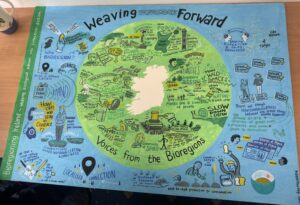
One of the most interesting ideas explored during the day was bioregioning – looking beyond county and administrative boundaries and instead thinking about places through their natural systems, including landscapes and river catchments.
The discussion asked what might happen if people working on similar environmental, food and community challenges across a region were better connected.
Rather than individual projects operating in isolation, the ambition is to identify a common purpose, connect people already doing good work and develop practical activities that can make the region more resilient.
This idea of connecting what is already there strongly resonated with Our Shared Plate. Often, building a stronger local food system isn’t about starting from scratch. It begins with recognising the growers, farmers, producers, community groups, knowledge and relationships that already exist locally – and finding ways to connect them.
Slí na Feirme – filling a missing link
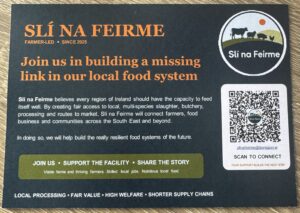
A major focus of the day was Slí na Feirme, a farmer-led collaboration working to create better local routes for food produced in the South East.
The initiative is exploring access to local multi-species slaughter, butchery, processing and routes to market, connecting farmers with food businesses and communities.
It is a practical reminder that shortening a food supply chain requires infrastructure as well as good intentions. Producing food locally is only one part of the picture. Farmers also need viable ways to process, sell and distribute that food locally while receiving fair value for what they produce.
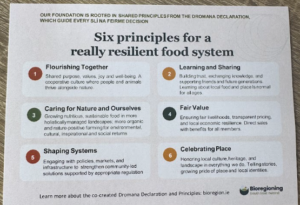
The six principles shared through the Dromana Declaration provided a lovely framework for this wider vision: Flourishing Together; Learning and Sharing; Caring for Nature and Ourselves; Fair Value; Shaping Systems; and Celebrating Place.
There are some striking parallels here with the work happening through Our Shared Plate – particularly the importance of learning together, valuing local knowledge, strengthening relationships and recognising food as part of the identity of a place.
A local food system you could actually taste
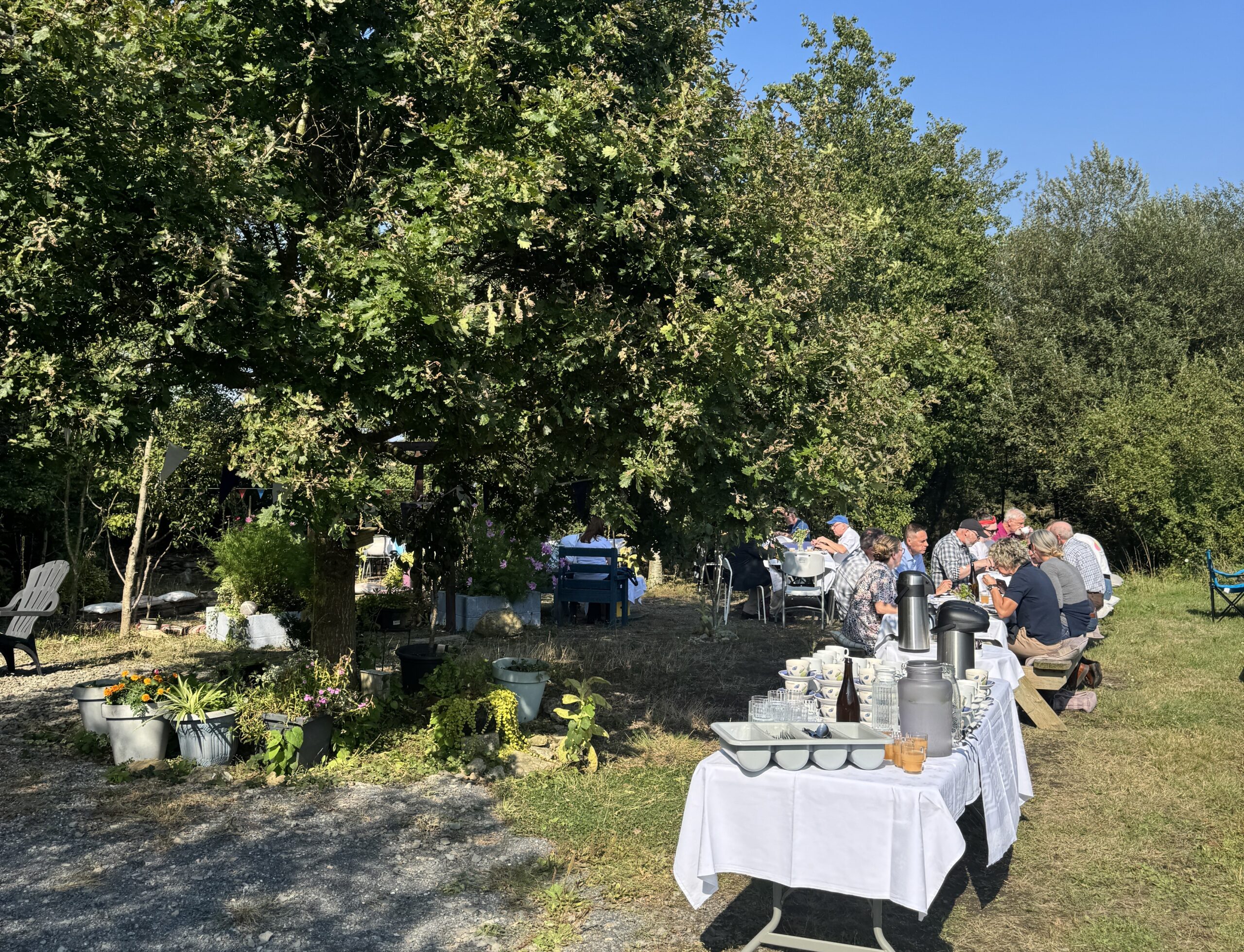
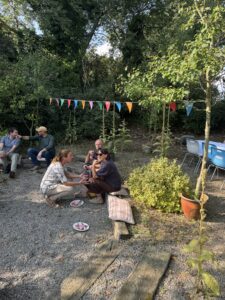
Of course, it wouldn’t be a gathering about local food without sharing some!
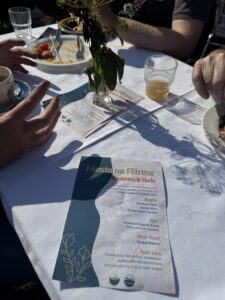
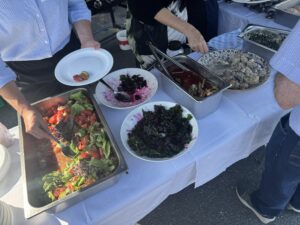
Chef Luis Martin of Mara, alongside Jon Toy (Meat Jon), prepared a wonderful seasonal feast showcasing produce from Barefoot Farm, Garraí Mara, Green Man’s Garden, Newbard Organic Farm, McGrath’s of Lismore and Seagull Bakery.
Even the apple juice told a story: windblown apples were community-harvested with Newbard Farm before being pressed by a local cider maker.
It was a simple but powerful demonstration of what a shorter food supply chain can look like in practice – food grown and produced locally, prepared locally and enjoyed together.
We shared lunch and conversation with Ger and his colleague from FRS Co-op, with the wider gathering also bringing together familiar faces from across food, farming and sustainability, including Darina Allen, Pippa Hackett and Dan Boyle.
People Who Inspired Us
A huge part of what made the day valuable was hearing directly from the people doing the work.
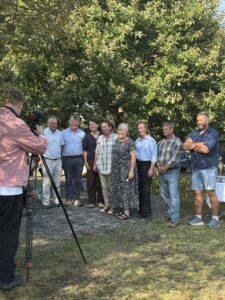
Our thanks to hosts and trailblazers Sarah and Keely from Bioregioning South East Ireland, Siobhán Hubbard of Newbard Organic Farm, farmer and ethical butcher Jon Toy, and the team at Dunhill Eco Park for bringing people together and generously sharing their experience. What stood was the willingness to collaborate.
Farmers, processors, chefs, communities and organisations each hold different pieces of the food-system puzzle. Bringing those pieces together creates possibilities that are difficult to achieve alone.
Hearing from small organic producers
It was also great to meet Julie Powell of Gurteen House Organic Farm, a fourth-generation family farm producing pasture-reared organic eggs, salads and vegetables.
Julie arrived at the gathering straight from a farmers’ market in Borrisoleigh, Co. Tipperary – which in itself felt like a fitting illustration of the realities of small-scale food production.
She spoke openly about her experience as a small organic farmer and some of the obstacles faced by producers trying to grow, sell and distribute food locally. Her perspective was an important reminder that if we want resilient local food systems and shorter supply chains, we also need to make it viable for the small farmers and growers at the heart of them to keep doing what they do.
For Our Shared Plate, conversations like this are particularly valuable. They help connect what we see at community level with the experiences of the people actually producing our food and reinforce why creating stronger links between growers, producers, markets and communities matters.
Projects That Got Us Thinking
FRS Co-op
Over lunch, we had a fascinating conversation with Ger and his colleague from FRS Co-op, an organisation originally founded by farmers in 1980 and still rooted in supporting rural communities.
Ger works specifically in deer management, which opened up an interesting conversation about how we manage our landscapes, wildlife populations and the resources available within them.
It was another reminder of just how interconnected our food and land systems are and the value of bringing people with very different areas of practical expertise into the same room. These are exactly the kinds of conversations that help us look at the idea of a resilient local food system from a much wider perspective.
Three things we’re taking back to Our Shared Plate
Think beyond individual projects. A community garden, local producer, café, farmer or food initiative becomes more powerful when we understand how it connects into the wider local food ecosystem.
Infrastructure matters. Shortening supply chains isn’t simply about encouraging people to “buy local”. Farmers need processing facilities, viable routes to market and systems that allow value to remain within the region.
Food builds relationships. Perhaps the simplest learning of the day was demonstrated around the lunch table. Sharing locally produced food creates the space for conversations, relationships and ideas to develop, something we see time and again through Our Shared Plate and our sister campaign Street Feast which hung proudly in the garden from past community celebrations.
The words displayed during the event perhaps captured it best: “What’s on your plate is the ethos of this movement.”
For Our Shared Plate, that’s something worth continuing to explore.
Our Shared Plate’s Short Food Supply Chains work is supported by the Department of Agriculture, Food and the Marine.
Find Out More
Event: https://bioregion.ie
Project: https://bioregion.ie/sli-na-fierme/
Useful resource: Find out more about Our Shared Plate and explore our free community food-growing resources at oursharedplate.ie.